Winning a car at auction is the easy part. The hard part starts the moment the hammer falls (or the online timer ends): you have a deadline to pay, a limited window to collect, storage charges waiting if you miss it, and often a car that cannot legally or safely be driven home.
This guide shows how to collect a car from auction in the UK — exactly what happens after you win, what you need to collect the car, when you can drive it and when you should book recovery, and the mistakes that cost buyers money.
Quick answer: how do you collect a car from auction?
In most cases the process looks like this:
- Pay in full by the auction’s deadline. Most auctions will not release a vehicle until payment has cleared.
- Get your release or collection details (a collection note, gate pass or release confirmation, depending on the auction).
- Book a collection slot if the auction requires one.
- Collect within the free storage window, with photo ID and any paperwork the auction asks for.
- Drive it home or transport it. Only drive it if it is taxed, insured and roadworthy. Otherwise book a recovery or transporter.
Every auction sets its own deadlines and fees, so always check the terms for your specific sale.
Won a lot and not sure how to get it home? Send us the auction name, lot number and where the car needs to go. Call +44 7907 829402 or contact AutoHub Recovery and we will explain how collection would work for your car.
What happens after you win a car at auction?
Three things start at once: your payment deadline, your collection window and, if you miss it, your storage clock.
Payment and release
Most auctions expect payment within a short window, often within one to two working days. Once payment has cleared, the car is released for collection. Auction houses are strict about this: they generally will not hand over a vehicle until the funds have cleared in their account, so a bank transfer made at the last minute can delay collection.
Missing the payment deadline can be expensive. Copart UK, for example, publishes a late payment fee if the sale price and fees are not paid within three working days of the auction, and it can relist the car if payment is still outstanding after six calendar days, with a relist fee on top.
Collection windows and storage fees
The length of the free storage period varies a lot between auctions, which is the single biggest trap for first-time buyers.
| Auction type | Typical approach |
| Copart UK | Published terms give three free days including the day of sale. Collection is by appointment through its Transportation App, Monday to Friday, once payment has cleared. Storage can be charged on weekends and bank holidays if you collect after the free period. |
| Regional auction houses (for example, Hobbs Parker) | Their buying guide says invoices are due by noon the day after the auction ends and cars must be collected within five days. |
| Other auctions | Some give 24 to 48 hours before daily storage starts. |
The rule is simple: the clock starts when you win, not when you pay. Read the terms before you bid, and plan your collection before you place the bid.
Always confirm the current fees and deadlines with the auction itself. They change, and the figures above are examples, not guarantees.
What do you need to collect an auction car?
Bring or prepare these before you set off:
- Your invoice, collection note or release confirmation. This identifies the vehicle and proves it has been paid for.
- Photo ID. A driving licence or passport that matches the person named on the account or authority.
- Collection appointment details, where the auction uses a booking system.
- Keys, if they are collected separately. Some sites issue keys from a key office, others release them with the vehicle.
- Proof the vehicle is cleared for release, such as a gate pass or release number.
Can someone else collect the car for you?
Yes. Many buyers use a recovery company or transporter. Most auctions have a process for this, and it usually involves the buyer authorising the third party in advance. Typical requirements include:
- the vehicle details (auction name, lot number and registration),
- a signed authority letter or an authorisation through the auction’s online account,
- the driver’s name and ID,
- the release details for the vehicle.
The key point is that the transporter cannot collect until the auction has released the car and recorded them as authorised. That is why the paperwork needs to be sorted before the driver arrives. Our auction vehicle collection service handles this side of the process for you.
Can you drive an auction car home?
Sometimes, but check three things first.
1. Is it taxed? Vehicle tax does not transfer to a new owner, even if the car showed as taxed before the sale. You must tax it yourself before driving it on the road. You will normally need the new keeper reference (from the V5C or the green V5C/2 new keeper slip) to do this.
2. Is it insured? Once the hammer falls, the car is your responsibility. You need valid insurance before you drive it away, and you should check that the policy covers the vehicle you have bought.
3. Is it roadworthy and does it have an MOT? An MOT stays with the vehicle when ownership changes, but if it has expired or the listing says “no MOT” or “sold as seen”, driving it home may be illegal or unsafe. If the car has been off the road, check whether it has been declared SORN.
If the listing describes the car as a non-runner, salvage-only, or says it has an engine fault, treat that as a clear signal to book transport rather than risk it.
When should you book recovery instead?
Book a recovery truck or transporter when:
- the car is a non-runner or has a known fault,
- the car has no MOT, no tax or no insurance in place,
- the wheels are locked, the steering is damaged or the car has accident damage,
- the car is a salvage category vehicle that needs careful handling,
- the journey is long or the roads are busy,
- you are short on time and cannot make the collection window yourself.
Why a flatbed is usually the safer choice
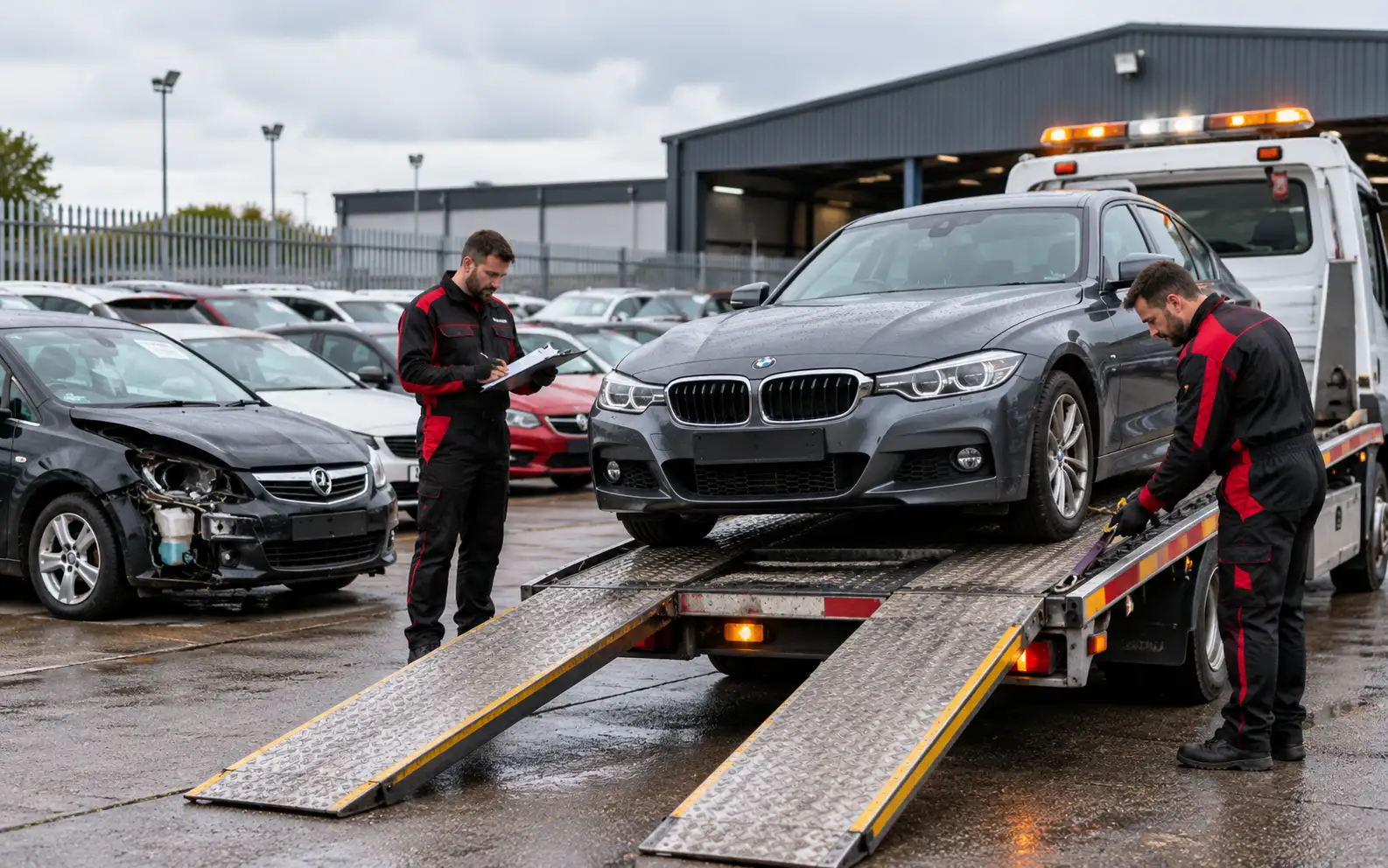
For non-running or damaged cars, a flatbed or suitably rated trailer is generally the safest way to move the vehicle. The car is winched up and carried rather than towed, which reduces the risk of further damage. Never try to push a heavy non-runner onto a ramp yourself.
Bought a non-runner? Tell us the auction, the lot number and whether the wheels turn, and we will arrange the right equipment. Request a collection or learn more about our car recovery services.
How to book auction transport step by step
- Check the collection rules first. Look up the free storage period, collection hours and third-party rules.
- Pay promptly. Transport cannot be booked for release until the car is paid for.
- Gather your details. Have the auction name, lot number, registration, collection site and delivery address ready.
- Say whether it runs. This decides the type of vehicle and equipment needed.
- Authorise the transporter through the auction’s process.
- Agree the price before collection. Ask what is included and whether VAT applies.
- Confirm the day and time. Make sure it fits inside the auction’s collection window.
- Check the car at pickup. Photos and a signed condition note protect you if damage is disputed later.
Common mistakes that cost buyers money
- Paying late. Late payment fees and relisting can add hundreds of pounds.
- Missing the storage window. Weekends and bank holidays can count as storage days.
- Forgetting to authorise the transporter. The driver turns up and cannot collect the car.
- Assuming the tax transfers. It does not. Driving an untaxed car is an offence.
- Driving without insurance. Insurance must be in place before you move the car.
- Ignoring zone charges. If the route passes through a clean air or low emission zone, check whether any charge could apply to the vehicle or the transporter.
- Skipping the handover check. Photograph the car before it leaves the site.
How much does auction car transport cost?
It depends on the distance, the type of vehicle, whether it is a runner, the equipment needed, how urgent the collection is, and where the car is going. Because those factors vary from job to job, there is no single fixed price. Our guide to how car recovery pricing works explains the call-out fee, per-mile rate and other factors in more detail, and the same principles apply to auction collections.
The best way to get an accurate figure is to share the auction, lot number and destination and ask for a quote before you book.
Collecting a car from auction in London and West London
If you have bought a car at auction and need it taken to a home, garage or business address in West London, a local recovery company can reduce both the journey time and the risk of missing your collection window.
AutoHub Recovery is based in Southall and works across West London, including Southall, Hayes, Hanwell and Acton. You can see the full list on our areas we cover page.
How AutoHub Recovery handles auction collections
We keep the process simple:
- You tell us the auction, lot number, vehicle and delivery address.
- We confirm whether the car runs and what equipment is needed.
- We agree the price and timing with you before the job starts.
- We collect the vehicle and deliver it to your garage, home or business.
If you want the full picture of how our service works, read our auction vehicle collection guide.
Need an auction car collected? Call +44 7907 829402 or send us your lot details and we will come back with a clear quote.
Frequently Asked Questions
How long do I have to collect a car after an auction?
It depends on the auction. Some give a few days, others only 24 to 48 hours before storage charges start. Copart UK, for example, publishes three free days including the day of sale. Always check the terms for your sale.
Can someone else collect my auction car?
Yes. Most auctions allow a recovery company or transporter to collect on your behalf if you authorise them in advance. They will normally need the vehicle details, release information, the driver’s ID and your authorisation.
What documents do I need to collect a car from auction?
Generally your invoice or collection note, photo ID and any release or gate details. If someone else is collecting, add a signed authority and the driver’s ID. If you are driving the car away, you also need it taxed and insured.
Can I drive an auction car home?
Only if it is taxed, insured and roadworthy. Tax does not transfer between owners, so you must tax the car yourself first. If the car is a non-runner, has no MOT or is sold as salvage, book transport instead.
How do I get a non-running auction car home?
Use a recovery truck or transporter. A flatbed is usually the safest option for non-runners and damaged cars. Tell the operator the auction, lot number and whether the wheels turn when you book.
What happens if I don’t collect the car in time?
You are likely to be charged storage fees, and some auctions add extra charges for weekends and bank holidays. If you have not paid, late payment or relist fees can apply, and the car may be sold again.
Final Thoughts
Collecting a car from auction comes down to timing, paperwork and choosing the right way to move it. Pay on time, know your collection window, authorise your transporter and never assume a car is safe to drive home without checking the tax, insurance and MOT.
If you would rather not manage the deadlines yourself, get in touch with AutoHub Recovery and we will arrange the collection for you.
Auction fees, deadlines and rules change and differ between auctions. This guide is general information; always confirm current terms with the auction.